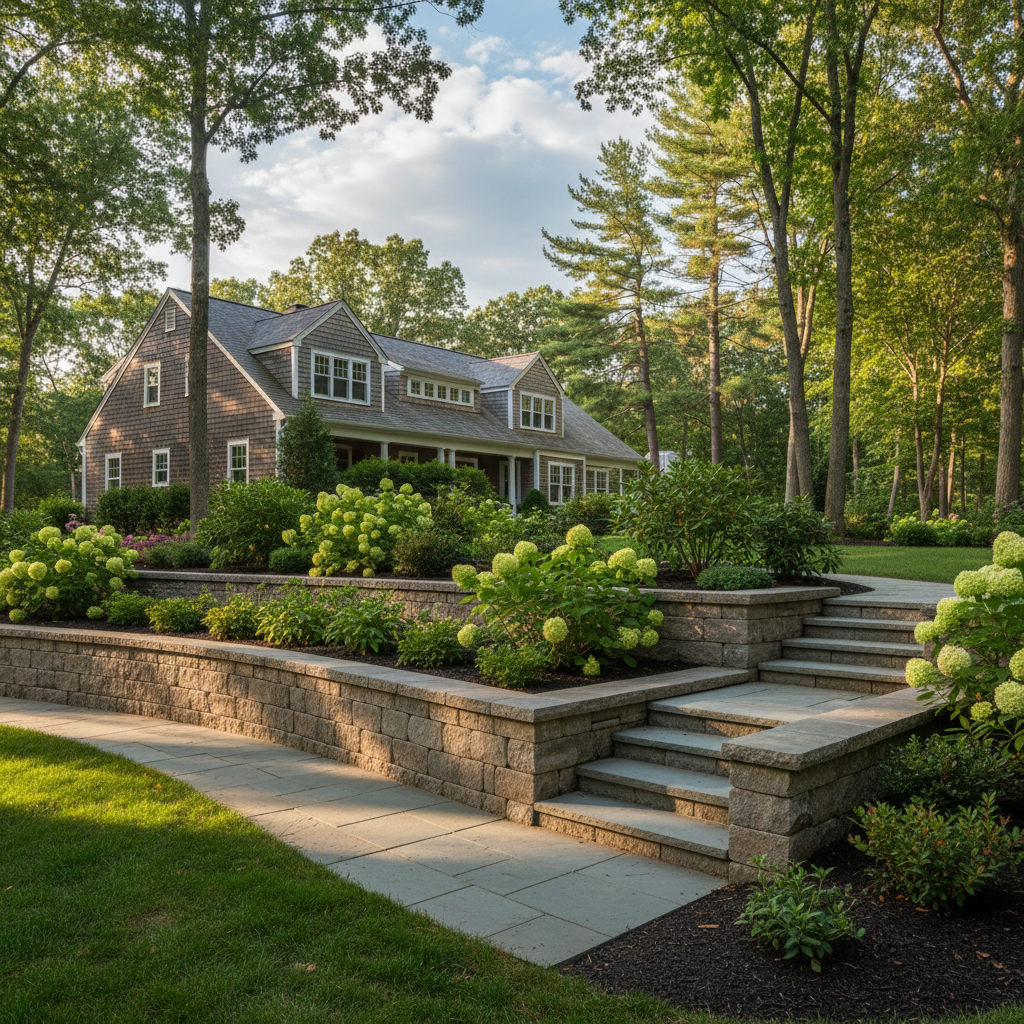
Brand-new stone walls often start leaning forward after just one heavy spring thaw in North Kingstown, RI. This is a common sight for homeowners around North Kingstown. Building a retaining wall looks straightforward on paper, but local glacial till soils and intense freeze-thaw cycles do not forgive shortcuts. Homeowners who are gathering quotes or mapping out a backyard project need to know what separates a permanent structure from an expensive pile of rubble.
Skipping the Drainage Layer Behind the Wall
Water is heavy, and it exerts massive hydrostatic pressure against any structure holding back earth. Many budget contractors skip the crushed stone backfill and perforated drain pipes because they think it saves time and money. Here in Rhode Island, where we get plenty of seasonal rain and freezing temperatures, trapping water behind a wall is a recipe for disaster. When that trapped moisture freezes, it expands with unbelievable force. If a builder tells you drainage is not strictly necessary for a wall under three feet tall, show them the door.
Ignoring Proper Base Preparation
A retaining wall is only as strong as what is sitting underneath it. Job sites often feature crews stacking blocks directly onto loose topsoil or uneven turf. That ground is going to settle unevenly over the first winter, dragging expensive masonry right along with it. Skyline Masonry Solutions spends a huge chunk of time just digging out and compacting the crushed aggregate base. If a contractor tries to rush the excavation phase or skimps on the leveling pad depth, you are guaranteed to deal with sagging sections and cracked caps down the road.
- Failing to dig below the local frost line for footers
- Using substandard fill dirt instead of clean angular gravel
- Neglecting geogrid reinforcement on taller slopes
Going Cheap on Materials
Bargain-bin concrete blocks or reclaimed timber might look tempting when you are trying to stick to a tight budget, but they rarely survive New England weather. Concrete that is not rated for freeze-thaw durability will start to spall and flake within a few seasons. Natural granite and high-density segmental systems cost more upfront, but they actually handle coastal humidity and winter ice without falling apart.
Failing to Check Property Lines and Permits
Nothing kills a weekend project faster than a stop-work order from the town building inspector. Depending on how high your wall is and how close it sits to your neighbor's property line or wetlands—especially common near coastal inlets and Narragansett Bay tributaries—you might need local approvals. Always verify setbacks before digging a single trench.
Taking the time to plan your wall right means you will not have to think about it again for decades. Make sure your contractor respects the engineering side of the job, and your landscape in North Kingstown will stay rock solid.